

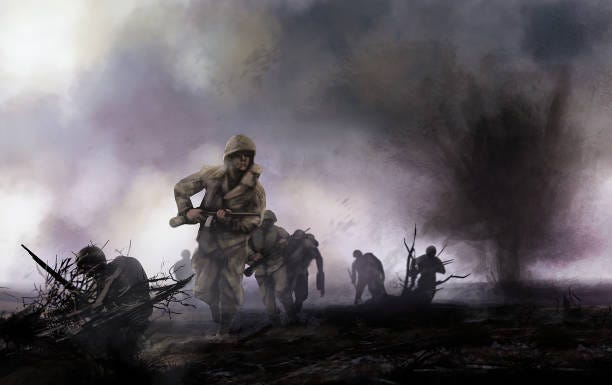
Silence is often mistaken for peace, but it is more often the residue of fear, fatigue, and
betrayal. A society does not lose its moral compass all at once—it misplaces it quietly,
one withheld voice at a time.
When conscience is deferred long enough, it does not disappear—it reemerges as rage,
spectacle, or collapse. The work of a healthy culture begins when ordinary people
remember that their voice still matters.
-Gary Null, PhD
Recently, “No Kings” marches and demonstrations took place across the United States. The No Kings sentiment is understandable and justified. But we must be honest: for more than a century, we have tolerated individuals and institutions exercising power not unlike that of kings, potentates, and unelected rulers.
There have been well over one hundred documented efforts at regime change around the world, nearly always framed with the same promise: to bring democracy and freedom. Yet the historical record tells a different story. In nation after nation, these interventions have resulted not in liberation, but in destabilization, resource exploitation, and widespread human suffering. Consider Libya. Consider Syria. Consider Iraq. Entire societies fractured, cities reduced to rubble, populations left to endure the consequences of decisions made far from their borders.
This raises a deeper question: What, exactly, are we opposing? Is it a single leader, a political figure, or is it the system itself, one that concentrates immense power in the hands of the military-industrial complex and extends support to regimes that do not embody the democratic ideals we claim to champion? Too often, outrage becomes selective. It is directed at individuals while ignoring the broader architecture of power that enables and sustains these outcomes.
Where was the collective moral response during the devastation of Yemen? For years, the United States, alongside allies such as Saudi Arabia and the United Arab Emirates, contributed to the destruction of one of the poorest nations in the Middle East. Hundreds of thousands perished. Children starved. Yet there was no sustained national outcry, no mass mobilization demanding accountability.
We must also distinguish between outrage and rage. Outrage, grounded in moral clarity, can illuminate injustice. Rage, untethered from principle, often mirrors the very destructiveness it claims to oppose.
If we are serious about change, it cannot be episodic or symbolic. It must be structural. It must include the willingness to challenge corruption at its roots - refusing to support those who perpetuate it, and demanding accountability for how power is exercised in our name.
Let us be clear: this is not new. We have been here before. And until we confront the system - not just its visible representatives - we will remain here again.
Think of the Vietnam War. Not as a historical abstraction, not as a chapter in a textbook, but as a lived catastrophe. Think of the millions of Vietnamese civilians - men, women, children - who were killed outright or permanently injured. Think of the land poisoned with Agent Orange, the generations born with deformities, neurological damage, immune disorders, cancers that never stopped coming. And then ask yourself: where were the apologies? Where was the accountability?
There were none.
By conservative estimates, roughly two million Vietnamese civilians were killed during the conflict, across both North and South Vietnam and extending into neighboring regions such as Laos and Cambodia. These figures did not come from antiwar activists or political opponents; they emerged from postwar Vietnamese government estimates and have been widely cited by mainstream historical sources. Other demographic studies place the total war-related death toll - civilian and military combined - at nearly four million, with civilians accounting for roughly half of that number. In other words, close to two million innocent people died as collateral damage in a geopolitical experiment that failed by every moral and strategic measure.
And that does not include the long shadow of chemical warfare. Between two and four million American service members were potentially exposed to Agent Orange. Hundreds of thousands of U.S. veterans have since died from conditions linked to that exposure, and well over eight hundred thousand receive disability compensation for Agent Orange–related illnesses. These numbers represent lives shortened, families altered, futures erased. And yet even here, accountability evaporates. No tribunals. No reparations commensurate with the harm. No meaningful reckoning.
For context, the official count of U.S. combat deaths in Vietnam—approximately fifty-eight thousand—has been memorialized endlessly. Names carved into stone. Ceremonies. National reflection. But the millions of Vietnamese civilians remain largely faceless in our cultural memory. Their suffering is acknowledged briefly, if at all, and then quietly set aside.
Now think of Afghanistan. Think of Iraq. Think of Libya. Think of the countless interventions carried out under the banner of democracy, security, or humanitarian concern. Since World War II, the United States has been involved in dozens of regime-change operations—more than fifty by some counts. The cumulative death toll from these interventions is staggering tens of millions of human beings displaced, maimed, or killed.
And again, not a single apology. Not a single architect of these wars held meaningfully accountable. No acknowledgment of the devastation left behind. No admission that entire societies were fractured, destabilized, and plunged into cycles of violence that persist long after the cameras leave.
This is the ultimate expression of sublimated rage. When a society cannot process its own aggression, it projects it outward, onto distant populations rendered abstract and expendable. We justify destruction before we unleash it. We speak of freedom while dropping bombs. We frame invasion as liberation. And the public, numbed by repetition and propaganda, goes along with it.
In fact, many cheer it on.
War is sold as necessity, as inevitability, as righteousness. Images are curated. Language is sanitized. “Shock and awe.” “Collateral damage.” “Surgical strikes.” These phrases anesthetize conscience. They transform mass death into strategic achievement. They allow people to feel morally superior while participating, indirectly, in annihilation.
And this is not separate from the violence we see at home. It is the same psychic process operating on a larger scale. The same willingness to erase victims. The same refusal to confront consequences. The same absence of remorse.
We rage at one another domestically while exporting far greater violence abroad. We lament disorder at home while manufacturing chaos elsewhere. We condemn crime in our cities while excusing slaughter overseas. And we do so because the victims are distant, unnamed, and inconvenient to remember.
This is how a culture normalizes brutality. Not by embracing it openly, but by rationalizing it endlessly. Not by celebrating cruelty outright, but by wrapping it in flags, slogans, and carefully constructed narratives.
And so the pattern repeats. Rage is never resolved. It is redirected. Violence is never healed. It is escalated. Accountability is never enforced. It is postponed until memory fades.
This is not history. It is psychology. And until we are willing to confront it honestly—until we are willing to see how collective violence abroad mirrors moral collapse at home—we will continue manifesting the same outcomes, again and again, under different names, in different countries, with the same devastating results.
Empire, Spectacle, and the Long History of Justified Destruction
Now widen the lens further. This is not new.
Rome
The Roman Caesars understood this dynamic perfectly. Wherever the empire expanded, amphitheaters followed. In North Africa, including what is now Libya, the Romans encountered lands rich in wildlife. Animals were captured—often at great effort and cruelty—not for survival, but for spectacle. They were transported across vast distances so they could be slaughtered publicly for entertainment.
Gladiators, too, were forced into ritualized combat, killing one another for the amusement of the masses. The amphitheater became the centerpiece of public life. Blood, death, and domination were not incidental; they were essential. This was “bread and circuses”—the deliberate appeasement of a restless population through distraction and spectacle.
The more extreme the violence, the more captivated the audience became. Death was no longer tragic; it was thrilling. Bloodshed numbed people to their own suffering. It distracted them from boredom, from poverty, from the monotony and despair of daily life under empire. And in exchange for this constant stimulation, they offered their loyalty to emperors—no matter how corrupt, cruel, or unhinged those rulers might be.
This strategy worked for Caligula. It worked for Nero. It has worked for countless rulers since.
History repeats this pattern endlessly.
Germany
Germany after World War I offers one of the most devastating examples. National humiliation, economic collapse, and cultural disorientation created a population saturated with anger and despair. Inflation was so severe that it took a wheelbarrow full of currency to buy a single loaf of bread. People were desperate. Humiliated. Angry. Afraid.
Adolf Hitler did not invent that rage. He gave it focus. He transformed diffuse suffering into identity, scapegoating, and spectacle. Mass rallies overwhelmed individual thought. Propaganda aestheticized violence and obedience. Enemies were identified. Jews. Communists. Roma. Africans. The disabled. The mentally ill. Entire groups were dehumanized, labeled threats to the public good. Policies of exclusion, persecution, and extermination followed. Violence was framed as necessity. Mass murder was rationalized as civic duty.
The public did not follow Hitler despite his cruelty; they followed him because he expressed what had been simmering beneath the surface for years.
The people were drowning in despair and looking for meaning, for direction, for someone to blame. Rage found its target.
When someone came along and said, “I will fix this. I will restore order. I will make sure everyone eats,” people listened. And when inflation was brought under control and basic stability returned, trust followed. That trust was then weaponized.
Italy
Italy followed a similar trajectory under Mussolini. So did other nations under different banners and ideologies. Each society developed its own version of the same pathology: channeling collective suffering into hatred of an “other,” while consolidating power at the top.
Churchill
Even those celebrated as heroes of history were not immune. Winston Churchill is often remembered solely as a wartime leader, yet under his watch, food was diverted from India—during years of adequate harvests—to Britain and other parts of the empire. The result was the Bengal famine, in which millions of Indians starved to death in a land where food existed but was withheld. They did not control their own resources. They did not control their own destiny.
Stalin
Stalin employed the same tactic in Ukraine during the 1930s. Grain was seized. Movement was restricted. Millions starved in what became known as the Holodomor. Again, food existed. Again, it was weaponized. Again, there was no accountability commensurate with the crime.
When Rage Chooses Its Symbols
History leaves us with clues, if we are willing to look honestly at them. Civilizations do not stumble into cruelty by accident, nor do they elevate destructive leaders by chance. Again, what we see is something far more revealing: societies under strain externalize their unresolved rage through the leaders they choose and the entertainments they normalize.
France
Centuries later, revolutionary France followed a similar path. What began as a justified uprising against corruption and inequality devolved into moral absolutism and theatrical execution. The guillotine became a public stage. Heads fell not only as punishment, but as performance. The crowd did not merely demand justice; it demanded purification through blood. Leaders emerged who mirrored this frenzy—rigid, merciless, convinced of their own righteousness. Rage, once uncontained, consumed even the ideals that had sparked the revolution.
Japan
The same dynamic appears in imperial Japan before World War II, where ritualized violence, obedience, and sacrifice were elevated to moral virtues. Rage was not expressed as anger, but as honor. Death was preferable to surrender. Leaders reflected this ethos precisely, guiding the nation toward catastrophic ends while maintaining the illusion of moral purity.
These patterns did not end with the twentieth century. They simply adapted to new technologies.
Trump
In the United States, long before Donald Trump entered politics, the culture had already normalized humiliation as entertainment. Reality television thrived on degradation. Sports increasingly glorified injury. Media monetized outrage. Social platforms rewarded cruelty, mockery, and moral certainty. Trust in institutions collapsed. Jobs disappeared. Communities hollowed out. Language itself lost credibility.
Trump did not create this environment. He was selected by it.
He functioned as a modern spectacle leader—a vessel for collective resentment, a permission slip for anger spoken without restraint. His appeal was not rooted in policy coherence or moral vision, but in emotional resonance. He said aloud what many felt privately. Like the emperors of Rome or the demagogues of collapsing republics, he transformed rage into performance. And just as history would predict, opposition to him often mirrored the same fury, completing the cycle.
Across eras and cultures, the lesson is consistent. When people lose agency, rage seeks expression. When it cannot be integrated through justice, dialogue, and reform, it manifests through spectacle—violent entertainment, public humiliation, and leaders who embody contempt. The culture chooses symbols that can carry what it refuses to process consciously.
This is not about left or right, ancient or modern. It is about psychology. About the unresolved emotional life of societies.
History does not punish nations for ignorance. It punishes them for unexamined rage—rage turned outward, ritualized, and eventually weaponized. And unless we learn to recognize these patterns within ourselves and our culture, we will continue reenacting them under new names, new technologies, and new banners, mistaking expression for healing and spectacle for strength.
These are not isolated historical footnotes. They are recurring expressions of the same underlying force: a ruling class preserving power by exploiting suffering, redirecting rage, and anesthetizing conscience.
What changes from era to era is not the psychology, but the technology. Amphitheaters become movie screens. Gladiators become athletes and soldiers. Bread and circuses become media feeds, endless content, constant distraction. Empires learn new ways to keep populations entertained, divided, and emotionally exhausted.
And when rage is sufficiently diffused—when people are too distracted, too frightened, too divided to resist—violence on a massive scale becomes not only possible, but popular.
This is how entire nations are destroyed with applause. This is how moral catastrophe becomes policy. This is how history keeps repeating itself, not because people fail to remember facts, but because societies refuse to confront the psychological mechanisms that make atrocity acceptable.
Until that reckoning occurs, the cycle will continue. Different countries. Different leaders. Different enemies. Same outcome.
Contradiction as Policy, Apathy as Power
Isn’t it astonishing? Donald Trump believes he deserves no better prize than his followers themselves. And yet, while cultivating the image of an outsider and a disruptor, he has supported the funding of wars that perpetuate massive human suffering. Hundreds of billions of dollars flow to sustain conflict—supporting Israel’s war against the inhabitants of Gaza and the West Bank, while simultaneously fueling the war between Ukraine and Russia. The contradiction is never acknowledged.
If that funding were halted—if the money stopped—those wars would be forced to stop as well. They would have no choice. And yet this is never presented as an option. Instead, it is framed as inevitability, as necessity, as strength. And politicians take pride in it.
The contradiction is not unique to Trump. Barack Obama was awarded the Nobel Peace Prize and then presided over the initiation or expansion of seven wars. The symbolism is grotesque. Peace celebrated in rhetoric; violence enacted in policy. These contradictions are not accidental. They are structural.
Part of the deeper problem we face is that life continually presents us with choices between opposing moral poles: kindness or cruelty, responsibility or neglect, selflessness or self-absorption, awareness or denial. And repeatedly, as a society, we choose the path of least resistance.
Take something as basic as civic participation. In New York City, roughly thirty percent of eligible voters determined the fate of a city of more than eight million people. Less than two million votes decided governance for millions. That means the vast majority opted out. And yet one hundred percent of the population is affected by the outcome.
Everyone, regardless of wealth or status, is exposed to the consequences: open urination and defecation, drug use, untreated mental illness, street violence, constant confrontation. No neighborhood is immune. Not Park Avenue. Not Fifth Avenue. Not Chelsea. Not the Upper East or West Side. Walk through midtown Manhattan—from Fifty-Seventh Street to Twenty-Third, across Broadway, Seventh, Sixth, and Eighth Avenues—and you see it clearly. The streets are packed, filthy, tense. Pickpocketing is routine. Disorder is normalized.
And now we are told that behaviors once considered unacceptable will no longer carry consequences. Shoplifting has already gone largely unpunished for years, resulting in billions of dollars in losses. In a single year, New York businesses lost over four billion dollars. Large corporations may absorb that. Small business owners cannot.
Legacy stores—family businesses passed down through generations—are forced to close because they cannot survive constant theft. Inventory disappears. Insurance becomes meaningless. Lifetimes of work vanish. And the response from policymakers is indifference.
We are told that even inappropriate sexual touching may soon no longer be treated as a misdemeanor. That it will not carry meaningful consequences. One behavior after another is reclassified, excused, normalized. And yet ask anyone—from billionaires in luxury penthouses to ordinary residents on side streets—whether they want to be screamed at, slapped, groped, or assaulted on a daily basis. Every single person will say no.
So why didn’t they vote?
That is the uncomfortable question. The majority of Americans do not vote. And yet they feel deeply impacted by the choices of those who do. The consequences of disengagement are visible everywhere—in our institutions, our streets, our schools, our healthcare system.
Many people stopped voting not out of laziness, but out of betrayal. Union members, lifelong Democrats, working-class families watched their jobs disappear after trade agreements like NAFTA and CAFTA were passed. They were promised prosperity. They were promised more jobs. Instead, factories closed. Work was outsourced. Communities collapsed. There were no apologies.
Steelworkers, autoworkers, machinists—people who had given their lives to skilled labor—were offered no meaningful transition, no retraining, no dignity. They were discarded by both political parties. Republicans and Democrats alike betrayed their constituents. And so people withdrew. They stopped voting—not out of apathy, but out of anger.
Anger has to go somewhere. If it has no outlet, it turns inward. It becomes chronic. Restrained. Poisonous. Trust erodes.
And trust is the glue that holds everything together—families, friendships, communities, societies. Trust that people in authority are acting with integrity. Trust that institutions exist for the common good. Trust that harm will be acknowledged and addressed.
When that trust is broken repeatedly, cynicism replaces hope.
Look at medicine. In 1983, children received roughly ten vaccines. In 2024, that number rose to around ninety. During the same period, autism rates have skyrocketed—from approximately one in ten thousand to one in thirty-two or lower. And yet every concern raised by parents is dismissed. Every injury is denied. Every adverse outcome is attributed to anything except the interventions themselves.
Patients are told it has nothing to do with the drug. Nothing to do with the treatment. Nothing to do with the vaccines. Accountability is absent. Transparency is nonexistent. The pattern repeats across pharmaceuticals, medical devices, and public health policy.
This is what systemic denial looks like. It is not one failure. It is many, layered on top of one another, until the weight becomes unbearable.
And so people retreat. They disengage. They no longer trust. They look for figures who express their rage because rage feels honest when everything else feels fraudulent. They gravitate toward contradiction because contradiction mirrors their lived experience.
This is how moral incoherence becomes normalized. This is how betrayal becomes policy. This is how apathy becomes power.
And unless we confront that honestly—unless we reclaim responsibility, discernment, and moral agency—we will continue living inside the consequences of choices we refuse to make.
When Trust Is Broken, Rage Looks for a Voice
There was a time when a person could enter a hospital, receive competent care, and leave without being financially ruined. In the 1950s, hospitals existed primarily to heal. Treatment was not perfect, but it was guided by an ethic of service. You were a patient, not a revenue stream.
Today, that trust has been shattered.
A friend of mine recently went to the emergency room for something as ordinary as an upset stomach. Nothing was done. No meaningful diagnostic work. No treatment. He was given a single bag of saline—salt water—and told to wait. He sat there for three hours. The bill that arrived later was ten thousand dollars.
That same bag of saline costs the hospital about two dollars. He was charged seven hundred.
That is not healthcare. That is institutional predation. And it destroys trust.
Only a profoundly naïve person would believe that institutions charging those kinds of prices exist to serve the public. And once that trust is broken in medicine, it fractures everywhere else. We begin to distrust the media for lying repeatedly and never acknowledging those lies. We lose faith in government agencies, in politicians, in celebrities who are presented as authorities despite having no training, no scholarship, no experience in the fields they promote.
They tell us to buy products. To take drugs. To submit to interventions. Not because they have studied the evidence, but because they are paid to say so. And if the money stopped, the certainty would stop with it.
This became painfully clear during the COVID era. Public figures with enormous platforms—media personalities, entertainers, political commentators—became aggressive advocates for medical interventions they did not understand. They condemned anyone who questioned them. They mocked, shamed, and vilified dissent. And they were wrong about nearly everything.
Those who were right—those who raised legitimate scientific and ethical concerns—were silenced, censored, de-platformed, and attacked. That kind of inversion does not merely erode trust in medicine or media; it corrodes trust in the entire social contract.
What happens to the rage that follows?
Often, it seeks the loudest available outlet. People begin to vote for individuals who do not hide their anger, who display it openly, even proudly. Politeness, dignity, and restraint are rejected in favor of spectacle. Vulgarity becomes a virtue. Screaming becomes authenticity.
The thinking goes something like this: If I’m not allowed to say what I feel, I’ll support someone who will say it for me—no matter how destructive or crude it is.
But rage expressed without wisdom is not liberation. It is self-harm.
Anger floods the body with cortisol. It degrades health. It narrows perception. It consumes energy that could otherwise be used for clarity, creativity, and change. A nation that lives in a constant state of rage is a nation damaging its own nervous system.
Outrage, on the other hand, is healthy. Outrage is what arises when we recognize injustice, exploitation, and abuse of power. Outrage can motivate reform. The difference lies not in the feeling, but in what we do with it.
Silence is not the answer. But neither is choosing leaders who merely amplify our anger while offering no constructive path forward. That only deepens division. It accelerates tribalism. It weaponizes identity. And it concentrates power in the hands of those least capable of wielding it responsibly.
Yet we are afraid to confront this honestly. Afraid to open the door to the national psyche. Afraid to examine our own complicity.
So we deny our biases. We deny our conflicts. We deny our role in elevating figures who represent the worst of our impulses. We know, on some level, that having someone scream on our behalf will not heal us. It will not restore trust. It will not rebuild institutions. But in the moment, we applaud anyway.
Instead of asking what we could have done differently—what would have produced a better outcome for everyone—we settle for catharsis.
Many people express their disillusionment by refusing to vote at all. They withdraw entirely. But that, too, is a choice—and not a neutral one. Outrage does not disappear when it is ignored. It stagnates.
There have always been alternatives. Independent voices. Outsider candidates. Imperfect but principled options that do not belong to the machinery of power. I voted for Ralph Nader. And Ralph Nader again. And again. Not because he would win, but because the vote itself was an act of conscience. It was a refusal to surrender agency.
Democracy is not only about winning. It is about participation. It is about integrity. It is about choosing alignment over resignation.
When we abandon that responsibility—when we trade discernment for rage—we do not punish the system. We punish ourselves. And we guarantee that the very forces we resent will grow stronger.
The question is not whether we are angry. The question is whether we are willing to transform that anger into something that heals rather than destroys.
That is the work before us.
When Silence Feels Safer Than Truth
At a certain point, exhaustion begins to masquerade as wisdom. After betrayal piles upon betrayal, after institutions fail repeatedly without consequence, many people do not become apathetic—they become protective. Withdrawal starts to feel like sanity. Silence begins to feel like self-preservation.
But silence is never neutral. It is a psychological position, shaped by fear, conditioning, fatigue, and learned helplessness. And when it becomes widespread, it quietly reshapes the moral terrain of an entire society.
We have all heard the phrase the silent majority repeated ad nauseam, yet few pause to ask what that silence actually represents. Silence does not mean the absence of opinion. It means the choice not to express it. And that choice is almost always rooted in experience.
At the height of COVID, for example, doctors, scientists, and journalists who challenged what they believed to be bad or misleading information were not merely debated—they were attacked. Reputations were destroyed. Careers ended. The message was unmistakable: speak at your own peril. Fear of professional and social annihilation became a powerful deterrent.
Others fell silent for a different reason. They were lied to and manipulated so often by people in power—corporations, government officials, presidents—that they reached a breaking point. I don’t trust anyone anymore, they said. I don’t believe anything. Having followed official narratives only to feel betrayed, they chose disengagement instead. Not rebellion. Withdrawal.
For many, this retreat felt reasonable. Daily life already contains more than enough crisis—work pressures, family responsibilities, financial strain, health challenges. Why take on crime, poverty, homelessness, foreign wars, wasted tax dollars, collapsing schools, and a relentlessly biased media? Surely someone smarter, better resourced, or more powerful would handle those battles.
And so the internal dialogue unfolds: Who am I? Just a regular person. Who would listen to me? If I don’t have a platform, what difference does my voice make? If I scream in the middle of the woods, only trees and shrubs hear me. It doesn’t matter.
Except that it does.
Silence is rarely accidental. It is cultivated—by culture, by religion, by politics, by ideology, by family systems that reward compliance and punish dissent. And there is always a consequence when decent people do not speak. Someone else will.
That voice may be shrill. It may be reckless. It may not care about solutions or positive outcomes. It may belong to an anarchist, an opportunist, an agent provocateur, or someone driven purely by resentment. Is that the voice we want amplified? Is that the voice we want shaping power?
The tragedy is that the average American is not apathetic, ignorant, or morally deficient. They are ethical. They are aware. They are constructive within their families, their communities, and society at large. They are the farmers who grow our food. The workers who make our clothing. The people who build our homes, cities, highways, and infrastructure. They carry the weight of society while receiving the least recognition.
And yet these voices are almost never invited into councils of power. Their lived experience is excluded from decision-making. Their silence is misread as consent.
This is why the task before us is not political posturing, but psychological courage. We must motivate the voiceless to find their voice—not through outrage or spectacle, but through the reclamation of agency. Because silence, however understandable, leaves a vacuum. And vacuums are always filled.
The Silent Exit of the Insulated Class
Why, we might ask, could we not vote for a person who was genuinely free—free of the constraints imposed by power, free of the dictates of donors and gatekeepers, free of the invisible agreements made long before an election ever takes place? Why is it that those who appear on the ballot are so often preselected by the powerful and then presented to an informationally impoverished public as the only viable choices?
Part of the answer lies with a group that rarely sees itself as political at all.
There exists a class of people who work hard—sometimes too hard—who spend long hours in offices and boardrooms, who hold positions of significance and authority. Their value is measured not by moral consequence but by performance: keeping stock prices high, protecting shareholder interests, neutralizing or absorbing competitors. Their loyalty is not to the public, but to boards of directors and executive hierarchies that hold their professional fate in their hands.
They live in a different physical reality.
They do not walk the chaotic streets. They do not navigate filth, disorder, or volatility. They are not stepping over human waste or discarded needles. They are collected by drivers, sealed inside vehicles, transported past the consequences of policies they never have to confront. What they pass through is dismissed as scenery.
At work, they exist inside a cocoon. Their needs are anticipated. Their preferences are accommodated. Their authority is affirmed. And many of them remember a time earlier in life when the city felt accessible—when Central Park was a place of leisure, when beaches and public spaces were shared, when time existed for family, friendships, hobbies, and travel. The city was not a battleground. It was a home.
Now they are successful. Powerful. Secure. And yet the deeper truth is that success has narrowed their horizon. The central concern becomes preservation—of relevance, of position, of status. Because we die two deaths.
The first is physical. The second is existential.
The second death arrives with the realization that everything we worked for—every title, every privilege, every access point—will vanish. It may take an hour or a year, but it is inevitable. And the fear of that realization drives much of what we see around us. People cling to relevance because relevance delays erasure.
Like the condemned person climbing the steps to the gallows during the French Revolution, there is a terrible awareness that time is short and replacement is immediate. For every position vacated, there are hundreds waiting. And so allegiance replaces conscience. Preservation replaces courage.
This class of people tends to be highly educated, professionally accomplished, and socially networked. They often regard voting as something for others—for the masses, for the unwashed, for those who did not attend elite institutions or gain entry into privileged circles. Civic participation feels unnecessary, even vulgar.
Relevance becomes the true currency.
You know you are relevant if a famous person returns your call within minutes. If you are invited onto panels, commissions, boards, NGOs, foundations, and think tanks—often regardless of whether you possess genuine expertise. Cleverness substitutes for wisdom. Productivity replaces ethics. Sensitivity is suspended.
What your decisions do to others is not your concern. If harm occurs, it is externalized. If a lawsuit arises, it is settled. A fine is paid. No one is arrested. The charter remains intact. The work continues. Allegiances are affirmed. Smiles are exchanged.
Why vote, then?
Policies will not affect you. Disorder will not reach you. Consequences are absorbed elsewhere. Others will bear the costs. You will not.
There are millions of people in this category in the United States—individuals who are not elected to office yet exert enormous influence over those who are. When you include their families and social networks, the number swells dramatically. Many of them claim to vote. In reality, most have exited participatory democracy altogether.
They have transcended it.
They exist within a parallel structure of power, one based not on public mandate but on access, association, and insulation. They do not need sponsors; they are the associates. They belong to a club that does not require ballots to function.
This is the class that flies private not because it is necessary, but because it signals separation. They could fly first class easily, comfortably, affordably—but exclusivity is the point. Distance is the message.
And so when we examine the failures of democracy, we must look not only at those who are angry, disillusioned, or disengaged, but also at those who feel entitled—those who have risen above concern, above accountability, above consequence. They do not rage against the system. They simply do not care.
They have made peace with it because it works for them.
And this, perhaps more than anything else, explains the depth of our crisis. A society cannot survive when the most insulated refuse responsibility, the most injured are denied voice, and the rest are left to discharge their anger through spectacle, protest, or proxy leaders who promise catharsis but deliver nothing.
The collapse of trust, participation, and moral courage does not arrive loudly. It arrives quietly, through absence.
Through those who no longer vote because they feel betrayed. Through those who no longer vote because they feel untouchable. Between those two poles, democracy withers.
And unless we are willing to confront both—the wounded and the insulated—we will continue mistaking power for legitimacy, relevance for virtue, and silence for stability.
That is the final reckoning this essay asks us to face.
Encouraging Actions for the Silent Majority
(Psychological, not political; practical, not performative)
Reclaiming Voice Without Becoming the Noise
Finding one’s voice does not require shouting, spectacle, or allegiance to extremes. It does not demand a social media following or public confrontation. It begins internally—with the quiet decision to stop outsourcing conscience.
Here are ways the silent majority can re-enter civic and moral life without sacrificing integrity, safety, or sanity:
Speak Locally Before Speaking Loudly
Voice does not begin on national stages. It begins in conversations with family, neighbors, coworkers, school boards, local councils, and community groups. Cultures shift from the ground up, not the top down.
Refuse the Binary
Resist the pressure to choose between manufactured extremes. Thoughtful people are allowed to hold nuance, contradiction, and uncertainty. Integrity lives in discernment, not slogans.
Support Independent and Ethical Voices
This includes journalists, researchers, educators, healthcare professionals, and community organizers who demonstrate courage and transparency. Attention, funding, and word-of-mouth matter more than outrage ever will.
Participate Without Idolizing
Voting, attending meetings, writing letters, and supporting causes are acts of agency—not declarations of moral perfection. Engagement does not require blind loyalty to flawed figures. It requires presence.
Withdraw Energy From Spectacle
Outrage economies survive on attention. Starve them. Choose depth over drama, reflection over reaction, substance over theater.
Practice Moral Consistency in Daily Life
How we treat service workers, strangers, dissenters, and family members matters as much as how we vote. Societies decay not only through bad leaders, but through normalized indifference.
Teach the Next Generation Discernment, Not Fear
Children do not need ideological programming. They need critical thinking, empathy, historical memory, and the courage to ask hard questions without being shamed.
Accept That Discomfort Is the Cost of Integrity
Speaking thoughtfully may cost approval, convenience, or belonging. Silence feels safer in the short term—but it carries a long moral price.
The silent majority does not need to become louder. It needs to become present. History has never been changed by perfection, only by participation. When ordinary people reclaim their voice—calmly, ethically, persistently—the vacuum that once invited extremism begins to close.
And that is how cultures heal: not through rage, not through spectacle, but through conscience rediscovered and quietly exercised.